
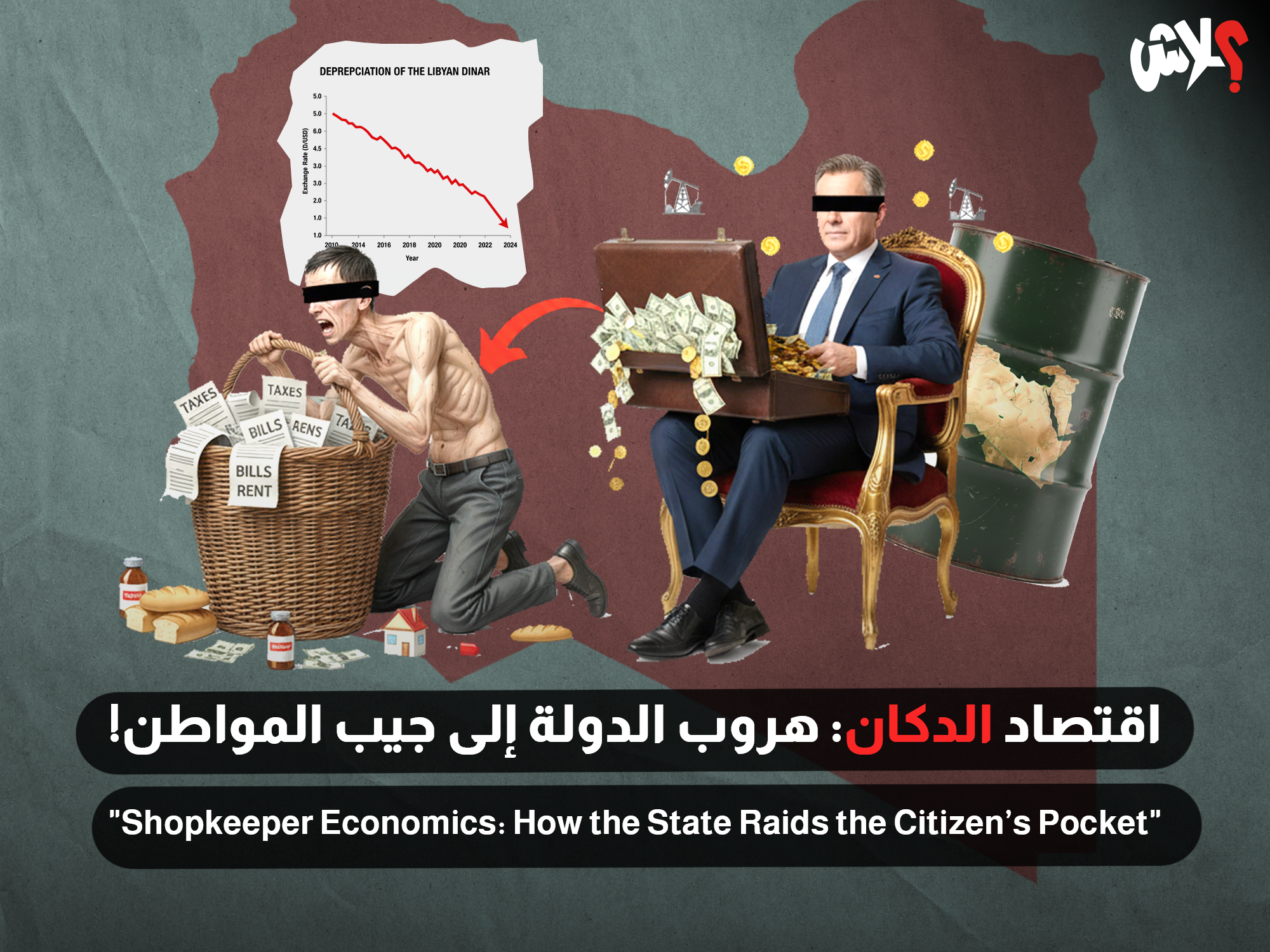
"Shopkeeper Economics: How the State Raids the Citizen’s Pocket"
The history of nations is full of moments of deep financial distress that exhausted and crippled them. Some states collapsed, while others survived and between collapse and survival lies the decisive difference: the choices made by ruling elites in moments of real danger.
When a state faces a sharp financial crisis shrinking revenues or rising expenditures logic, reason, and prudence dictate declaring a national emergency and launching austerity measures: cutting public spending, cancelling luxury projects, halting unnecessary imports, freezing travel allowances, perks, cars, hospitality budgets for ministers and officials, and redirecting all available resources toward saving what can be saved.
This is what is known as austerity a bitter but necessary dose of medicine to keep the patient from dying.
History tells us that many countries survived suffocating economic crises by adopting harsh austerity programs:
Germany after World War II, Britain in the 1970s, Argentina through its recurrent crises, and Greece, which nearly drowned in a sea of debt before being saved by painful but necessary measures.
But in Libya, logic is reversed.
When an economic crisis deepens and resources shrink, the state does not reduce spending it expands it. It does not cancel phantom projects it signs contracts for even bigger ones. It does not stop waste it indulges in more, producing new millionaires daily.
It does not punish those who looted the country it rewards them with positions and contracts.
So what does the state actually do to “deal” with the crisis?
It simply reaches into the pocket of the ordinary citizen and imposes a new tax not on major corporations, nor on high-ranking officials, nor on luxury goods…
No the new tax is on the exchange rate of foreign currency.
A decision that may look technical and harmless on the surface a crisis-solver but in reality, it is a poisoned dagger in the side of the poor citizen.
The decision translates directly into a wild surge in prices medicine, bread, milk, eggs, stationery, transportation everything that touches the citizen’s daily survival.
This policy leads to only one outcome: rampant inflation, deeper poverty, and eventually, a social explosion no one will be able to contain.
Countries that devalue or float their currency, or manipulate exchange rates so recklessly, typically have productive economies agriculture, tourism, industry sectors capable of adapting and compensating through exporting or increased production.
But Libya’s economy is fragile and rent-based, dependent on oil for about 95% of its revenue. It produces very little of what it consumes let alone exporting.
Everything we need is imported from nails to cars, from a Panadol pill to a grain of wheat.
Raising the value of the dollar against the dinar simply means imported goods become more expensive and traders will not absorb this cost; they will pass it directly to the consumer the exhausted citizen with a fixed salary that was not enough before inflation so how can it be enough after it?
At its core, the decision is an escape from confronting the real problem a false remedy for a serious disease. It is like giving a painkiller to a patient bleeding internally the pain may subside, but the bleeding continues until he dies.
A state that taxes people’s food and drink instead of cutting its own spending behaves like a small shopkeeper borrowing money to pay old debts just to keep his miserable store open a state burying its head in the sand while leaving the people’s bodies exposed to scorching sun and burning wind.
And the consequences are not merely economic they are social and political, too. History teaches us that hunger has always been a trigger for revolutions and that the rage born of deprivation is something no militia can stop.
The tragic irony is that those imposing taxes to “save the country” feel nothing of their impact they live in another world, far from public suffering and when collapse finally comes, they will flee with the billions they stole, leaving behind the citizen who entrusted them with his country to reap the disaster they sowed or rather, the disaster he helped sow upon himself.